Lara Albanese, Physicist, writer, and consultant in science and nature education
Scientific inquiry, children’s spontaneous and innate language
It’s not necessary to foster a scientific spark in young children, since from birth they continually engage with the world around them, seeking to understand its mechanisms and rules (Magrone and Millán Gasca, 2018). Scientists do the same, obviously applying laws and criteria learned through study and practice. Children are certainly not “little scientists,” because scientists have conducted in-depth studies and understand the formal rules governing science and scientific inquiry, and have carefully chosen the discipline with which to examine reality. Children’s inquiry, on the other hand, is comprehensive; they do not select the language of a single discipline, but examine the world through a multiplicity of languages, all placed on the same level. Certainly, this is already a lot, considering that today scientific thinking is rarely practiced by non-professional adults. Scientific thought and action are innate and spontaneous in children before education leads them to favor some languages and deny others. At the theoretical and programmatic level, projects and ministerial guidelines emphasize scientific thinking, but in practice, there are rare cases in which scientific thought and language manage to have the same dignity as other types of thought and language (Edwards et al., 2017). Various aspects of the scientific method are found in children’s actions. First, a scientific experiment must be repeated a statistically significant number of times. We know how children love to replicate the same action over and over again, precisely with the intent of understanding whether the result of this action is always the same. We can think of a child sitting and repeatedly dropping a small toy, often waiting for an adult to pick it up and give it back, then repeating the experiment many times. Once they understand the mechanism (for example, that a dropped object falls downwards, not upwards), the child, like the scientist, often proceeds by small variations (for example, what happens if instead of letting go of the object I throw it upwards?). Discovery and experimentation are therefore a natural part of a child’s thinking and acting. We adults can certainly contribute to and foster scientific thinking: if, for example, we tied the “pacifier” with a string to the child’s sweater, we would prevent bacterial contamination, but it would hardly help them understand how objects fall.
Supporting Children’s Scientific Skills
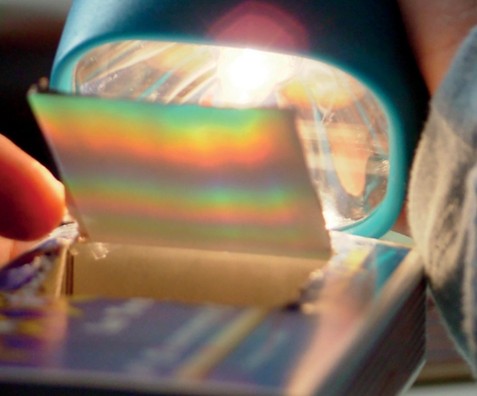
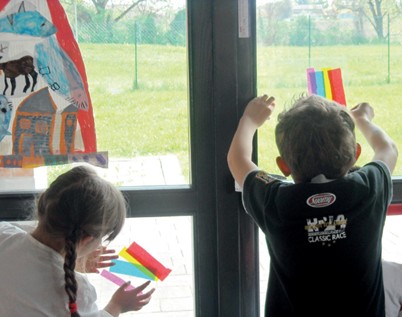
The first action we adults can take to support children’s scientific skills is certainly to allow them exposure to the world. Allowing them to touch and experience the universe around them, possibly expanding it. For example, if some children attend a nursery or school in the center of a noisy city, we must certainly allow them to discover the city, its magic, its strangeness (Munari, 2018), but we have the duty to expand their universe and allow them to discover meadows, flowers, trees, blue and starry skies, and to admire the moon: all opportunities that these children would easily miss without the careful effort of adults. Similarly, children in rural schools should get to know cities, learning about busy roads, buses, traffic lights, places without animals, with other smells, museums, and public parks. In short, schools have a responsibility to expose all children to experiences that encompass a broader world, not just the one their families frequent. At a school in Cape Town, a seaside city in South Africa, I happened to meet children from slums who had never seen the sea, even though it was just a few kilometers from the school. In this sense, science doesn’t require incredible laboratories; it requires adult awareness and organization. Furthermore, scientific activities, by their very nature, must be daily, or at least frequent. Only in this way do they become part of the development of children’s ideas and become thought—in this case, scientific thought. Science is an excellent tool for investigating light, color, transparency, and the opacity of materials. A suitably installed pair of tights can be an excellent scale. A known weight (such as a kilogram of sugar) is placed on one leg and other weights are compared with it. It is best to use simple, everyday, or recycled materials to ensure that the experience is not confined to exceptional contexts and materials. The section window itself is an important source of scientific investigation. It allows for the study of shadows (Dolci, 1999). Education in nature is, by its very essence, scientific education. Learning in these circumstances forces Indeed, it requires individuals to understand the context in which they operate, whether it be in the natural sciences or mathematics, geology, chemistry, or physics. Writing a poem in nature requires knowledge of the apparent movement of the sun (one doesn’t write well with the sun in one’s eyes), climate change, or the unexpected surprises of the world. Education in nature significantly reduces the gap between science and everyday life and thus allows science to have a place. Conducting science within four walls is almost impossible and requires the use of metaphors and simulations, which are sometimes useful but often redundant. Studying the moon with a ball greatly reduces the thrill of studying our satellite by observing it directly in the night (or daytime) sky. Science education must also take place in nature, although it can also find its place in artificial contexts. Simulations, combined with real-world observation of natural phenomena, can certainly be useful, even within schools. It’s natural for children to use models. After all, most toys are models. What is a doll if not a miniature girl? However, a doll would be meaningless if the child had never seen a small child or, more generally, a child. The same goes for toy cars, building blocks, and much more. And it’s also true for nature and the understanding of chemical and physical phenomena in nature. It’s pointless to simulate the formation of clouds or the water cycle in cross-section without first experiencing them firsthand. Curiosity and a genuine desire to understand come from the emotion felt when we feel drops of water trickling down our skin or see a pond drying up in the warmer months. Furthermore, teaching in nature doesn’t necessarily require climbing trees or walking barefoot through puddles, as some people sometimes believe. Of course, this can be an experience that enriches the use of the senses, but teaching in nature, in my opinion, means immersing oneself in the surrounding world without selecting certain types of experiences forced upon us by adults, but rather following the curiosity and instincts of children. Educating in nature means educating in the round, allowing the use of all points of view and all languages. Some children from a libertarian school immersed in nature in England recently declared that their school’s weakness was the lack of asphalt for playing with toy cars, roller skates, or skateboards (Neill, 2013). As for science, it is necessary to encourage rigorous scientific experimentation and, above all, the development and testing of scientific theories. This development can take place both outdoors and indoors; in fact, sometimes enclosed spaces better allow for the gathering and sharing of ideas. Essentially, to engage in science, children need direct, daily contact with the natural world, but they also need to be able to understand and experiment with the artificial world.
Experimenting with scientific method and thinking together
Doing science means using a method and taking a particular look at reality. This goes beyond any discipline (Rodari, 1997). Fairy tales are a mathematical combination of very specific functions (Propp, 1999). Working scientifically on fairy tales means applying a method to this field as well, leaving fantasy and imagination free. The scientific method takes nothing away from fantasy; indeed, without fantasy, no scientist would have made discoveries. Only by imagining something new can we transcend existing theories and advance science. In reality, primary school, and even middle school for that matter, does not allow children to do science, but rather encourages them to study the history of science. Even the way scientific experiments are proposed automatically makes them unscientific. Usually, books suggest experiments with a clear idea of what they are supposed to achieve. But where, then, is the experimentation? In this field, there is truly a lot to do… and to write. We really need to eradicate a mentality; we need to communicate that science is done, not studied, and that what matters is the scientific method and thinking, not the knowledge of scientists’ experiments and discoveries. Adults in this field must be companions. They must grasp scientific reasoning and develop it through children, valuing it and suggesting simple stimuli that allow scientific thinking to proceed. Even today, many teachers lack scientific knowledge and have no affinity with the scientific method. They have often told me that they fear that science might take away space for imagination and emotion. These adults have never practiced science. They have not understood that the scientific method enhances and fosters fantasy, emotion, and imagination. Precisely for this reason, the first step is to train teachers, play with them with science, and create and use scientific instruments. Only passionate adults can communicate this passion to children. For both children and teachers, I believe direct encounters with scientists and frequenting science laboratories are useful and important. Scientists are often well-disposed toward children’s open minds. In his office at the Arcetri Observatory (Florence), astronomer Franco Pacini displayed a single diploma presented to him by a class of schoolchildren. I also recall the famous American physicist Philip Morrison, who dedicated much of his life to communicating science to people of all ages. Refresher courses and training should, however, be extremely practical. During meetings, teachers often tell me they have done science with children without realizing it. I think this is very important: adults often fail to recognize science and the scientific method in children’s actions simply because they have never practiced this method and this way of thinking themselves. At the national level, many associations and groups, such as the Educational Cooperation Movement and the Educational Cooperation Network, are working in this direction. The workshops and scientific proposals of the great master Mario Lodi (Casa delle Arti e del Gioco, 2010) are unforgettable. The Googol association, of which I am a member, has also been offering refresher courses in which science is truly hands-on for over twenty years. The processes of documenting and evaluating scientific experiences are also very similar to those in other fields. To properly document scientific experience, it is essential to understand the main stages of scientific research: observation of reality, formulation of hypotheses, observation, and theory development. Regarding the evaluation process, I refer you to an article co-authored with James Bradburne and Alessandra Zanazzi,1 which emphasized the importance of evaluating not knowledge, but rather the process and method. Unfortunately, in this field, the evaluation of programs and projects is often oriented toward the acquisition of knowledge, while the focus should be on children’s learning of method and the development of theories. What matters is the scientific approach: the ability to observe natural phenomena without prejudice, the desire to formulate theories without fear of judgment, and the ability to combine imagination, creativity, and scientific rigor. These are all languages that children possess. It is up to us adults to allow them to grow and foster them.
Albanese L., The Scientific Box, in “Bambini,” no. 8, October 2001, pp. 66-70.
Albanese L., Making Space for Science, in “Bambini,” no. 9, October 2008, pp. 53-56.
Albanese L., The Communication Box, in “Bambini,” No. 1, January 2009, pp. 55-58.
Casa delle Arti del Gioco, Science on a Swing: Games and Science Cards, Editoriale Scienza, Trieste, 2010.
Dolci M., “The Shadow from Myths to Cunning,” in S. Sturloni, V. Vecchi (project coordinators), Everything Has a Shadow Except Ants, Reggio Children, Reggio Emilia, 1999, pp. 16-23.
Edwards C., Gandini L., Forman G. (eds.), The Hundred Languages of Children: The Reggio Emilia Approach to Early Childhood Education, Edizioni Junior-Spaggiari Edizioni, Parma, 2017.
Lodi M., The Moving Sky. 15 Stories of Nature, Editoriale Scienza, Trieste, 2017.
Magrone P., Millán Gasca A., Children and Scientific Thought: The Work of Mary Everest Boole, Carocci, Rome, 2018.
Munari B., In the Fog of Milan, Corraini, Mantua, 2018.
Neill A.S., The Happy Children of Summerhill: The Experience of the Most Famous Non-Repressive School in the World, Red, Como, 2013.
Propp V.J., Morphology of the Fairy Tale, Einaudi, Turin, 1966.
Rodari G., Grammar of Fantasy: An Introduction to the Art of Inventing Stories, Einaudi, Turin, 1977.