Manuela Ravecca pedagogista, formatrice autobiografica, raccoglitrice di storie
“When everyone thinks they know the meaning of a word, it stops breathing, stops living.If I think I already know what I’m doing, I stop questioning myself, I stop caring about words.”Laura Formenti
Working with Words
When approaching a well-known and widespread word, such as documentation, it’s interesting to question its essential meaning, the message it is thought to convey universally and objectively. Research into the hermeneutics of words becomes an interesting training ground for discovering subjective dimensions of meaning and perceptions that prove unshared, narrated with this or that word.
During the courses on documentation techniques, held over time, the journey begins precisely with the search for a shared meaning of the term documentation. A pact of mutual understanding that proves useful during the journey we undertake together, an agreement to define the starting point and to ascertain the destination. Therefore, we must interrogate words together to “experience their embodiment within our actions, gestures, sensations, and feelings” (Formenti, 2009), to rediscover their powerful foundational value in our living together, to give them a shared meaning. In that specific context, in the here and now, whether it be a training program, a faculty meeting, or a meeting with a colleague. Questioning what is meant by “documentation”
evokes sometimes very different meanings. The writing assignments offered help us indirectly arrive at a definition and bring out the authentic meaning each person attributes to the term, rather than the one we consciously intuit as the most correct.
Knowing what is being said, through the words we choose, in order to doubt them, perhaps later, becomes important for consciously engaging in biographical documentation, a particular form of documentation that begins with biographical writing and moves within the context of a specific form of educational relationship: the biographical relationship (biographical documentation will be the subject of a forthcoming contribution to the journal).
Understanding the embodied meaning of words helps us grasp their instrumental value, why we must act upon them and explore their content. Researching and better understanding the meaning of the word documentation can help find possible answers to the question why document?
What do we mean by documentation?
There are many texts that deal with documentation, and educational documentation in particular. It is not my intention to address the debate on the topic in this contribution, which inevitably summarizes it. My intention, instead, is to highlight just a few elements to understand the context within which the biographical documentation project operates and thus be able to easily place it in relation to previous knowledge, known or unknown content, and already consolidated documentation practices. In the box below, I report some definitional hypotheses that emerged during a course in Documentation Theories and Techniques for future early childhood educators. 1 Documentation, and educational documentation in particular, also pertains to different paradigms that flow into models, tools, and pathways. Documentation methods are specific to specific fields and contexts and cannot be considered universal. The concerted efforts between colleagues who share the same field of work and between educational institutions seeking to define documentation guidelines, developed by numerous working groups at the national level, demonstrate the need to position oneself, take a position, define oneself within the context of good practices in educational documentation, and identify oneself in order to identify within a broader panorama. Even the adjective educational, which typically accompanies, sometimes almost unconsciously, the word documentation, especially in educational and scholastic settings, requires special attention and questioning.
Documenting is…
Inform yourself about something, learn new things
Search for theses, studies, evidence, and testimonies for or against a thesis, an idea, or a
Write, photograph, record. Documenting is useful for remembering, preserving, and passing on memories. Documenting is a passion.
Objectively reporting situations and events that can be useful in the
Enrichment and
Keeping things in memory, for example, by writing down a child’s progress, development, or growth, and then explaining the changes to someone else.
Putting information on paper so that it is not
Keeping a written record of something that serves to demonstrate what exists.
Making something we do official out of a need for recognition of our work.
Leaving a trace of something so that it is useful both to ourselves, creating a history of our work, and to others.
Being in a situation and having to try to explain something, a concept, a place, or a subject to others.
Exploring a topic as deeply as possible to make it clearer and more complete.
Reporting lived facts and experiences so that be accessible to others.
Transcribing certain passages so that they remain available to others.
Enriching, coloring, representing.
An exchange to complete oneself and the baggage one carries.
Gathering information on a topic and then writing it down.
Choosing a subject and exploring the topic with the help of books, speeches, experiments, personal experience, and observation of relevant situations.
Going in search of something, I organize what I discover either in a folder or in a notebook. Documentation represents a register that contains a series of useful information for both the person providing it and the person receiving it.
Sharing. To enrich the collected materials, the diversity of various recording methods, such as writing and photography, is useful.
“Did you guess the riddle?” asked the Hatter, turning to Alice.No, I give up; what’s the answer?I haven’t the slightest idea! – Said the Hatter.”Lewis Carroll
Transversality of Documentation
Just as every story is composed of form and space, time and sequences, so too the activity of documenting traverses the categories of time and space in a particular way. Structures are created that become infrastructures of the outcome of the project, first, and of the product, afterward. Documentation takes on a form that is also a trace of its generative and constructive process, which unfolds as it consciously traverses time and space.
Temporality of Documentation
There is a time for documentation, as for everything. But what is the right time to think, plan, and create documentation? A few years ago, a slogan was circulating among educators and teachers, even in the absence of the Internet: think first, document later. A dual temporality, that of thought and that of action. A time to think about the documentation project, necessarily “before” everything else, and other times, subsequent and complex, connected to the time for doing documentation, but also times that are intertwined in the process of co-construction that characterizes documentation.
Methods of Documentation
How do you proceed when you want to document an activity or a process? Where do you start to develop a documentation project? In the specific literature, there are many frameworks that help structure documentation to make it simple but not superficial, exhaustive but not redundant, complete but not complex. These frameworks help realize the documentation project, the fruit of time dedicated to thinking about the documentation before implementing it in the various phases.
“Life is not a question that needs an answer, but an experience that needs to be lived.”Soren Kierkegaard
The Documentation Project
The questions that arise from questioning the timing and methods of documenting become the structure of the documentation project, a project that must necessarily be conceived and drafted before beginning the activity or the process one wishes to undertake, as a record of what has happened or will happen. The project is crucial even if the documentation is created retrospectively, that is, after the conclusion of the activity, because it helps reconstruct the narrative thread and the plot to be reconstructed. Verifying and interweaving what we would like to have and what was actually collected and recorded during the activity will provide a sense of purpose and measure between what is possible and what actually exists. Typically, defining the project leads to a focus on the importance of gathering evidence both in advance and during the process in order to create a good product. Often, the first few times, we notice gaps, missing evocative reminders of what has been done.
Thus, growth occurs between the creation of the first documentation products and the subsequent ones.
But the project takes shape, the structure becomes eloquent when we focus on the gaze with which we observe “things” and through which we reconstruct events, seeking the meaning of what happened in order to restore it redefined, more consciously. The “intentionality of giving meaning to the things we hear and see” (AA.VV., 2008, p. 42) becomes evident, and we consciously understand that documenting is not just recounting facts but seeking their deeper meaning. It is a quest that is always ongoing and always redefinable.
The documentation project is generally drawn up by a group of operators who together decide to document a process, but it can also see a single individual as the author, as well as an entire educational system.
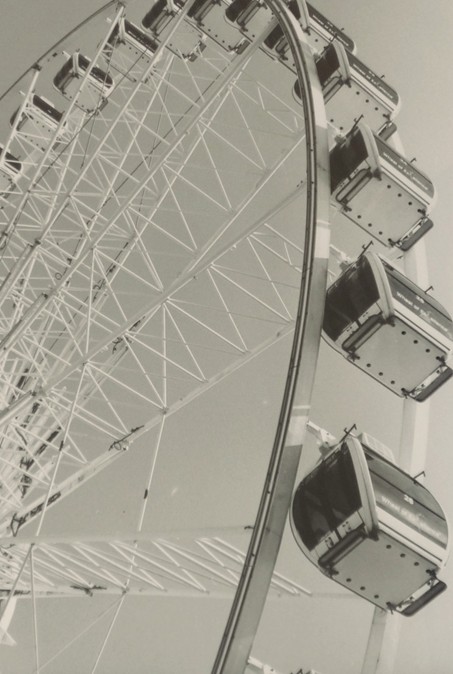
A complex system can consider a system documentation project, jointly defining objectives, methods, users, and timelines. “Working on a documentation project is an important moment: new connections are born, interweavings between different professional skills, and the commitment to adopt a research perspective that invites participants to conceive of themselves as field researchers” (Di Pasquale and Maselli, 2002, p. 9). Like a Ferris wheel that spins and invites us to continually adjust our gaze and perspective to find it both the same and different with each new spin.
When can documentation be considered educational?
Not all documentation can be defined as educational simply because it is documentation, obviously. There are certain characteristics that specify its adjective, aspects that can also be present together and that are generally not mutually exclusive.
The Object of DocumentationDocuments narrate and describe educational activities: play programs, learning programs, various types of teaching activities, workshops, internships, experimental projects… The educational object quite intuitively denotes documentation as educational and reveals the intentionality of its creator. It is rare for an educator or teacher to document non-educational aspects of their work and professionalism.
Informative Intention
Documents often tell those who weren’t there what happened and why it happened: they motivate and support educational action and, as such, make it accessible to others. Be they parents, family members, service providers, or ordinary citizens, those who use such documentation draw information from it that often influences educational action.
In some forms of documentation, such as biographical documentation, the intention to provide a testimony or memory of what happened makes the experience tangible: an object that can become a gift to be given or shared.
The Educational Effect
Over time, some documentation takes on a function that can be defined as secondary: it becomes a starting point and an opportunity for a journey of change, verification, and comparison, both for those who produced it and for those who read it without having been the protagonists. Documentation becomes a valuable tool that fosters reflection on action and sharing and exchange between different subjects. In this case, documentation fulfills a formative function in the broadest sense, and therefore undoubtedly educational. Products, in some way, move and inspire thoughts even after their creation, and if they are powerful, that is, built on deep shared meaning, they walk on their own and often reach very far.
Promotion of Educational Culture
Many documentation products contribute, through their dissemination, to greater awareness of the topics covered, and in this case, they are doubly educational because they fulfill an educational function both internal to the system that produced them and publically, broadening the general educational culture and promoting its recognition. The promotion of educational culture also helps foster the professional recognition of those who work in services, encouraging a valuable virtuous circle: from action to the world, from the world to action.
So why not document it?
Note
1 Extracts from the experience of the training courses on Theories and techniques of documentation in the framework of the regional courses for the training of early childhood educators, CSEA, Ivrea and Cuorgnè (To), 2007-2011. training courses on Theories and techniques of documentation within the framework of the regional courses for the training of early childhood educators, CSEA, Ivrea and Cuorgnè (To), 2007-2010.
Bibliography
AA.VV., The other stories…, in “Bambini”, n. 3, 2008, pp. 40-42.
Di Pasquale G., Maselli M., L’artedido- cumentare.Perchéecomefaredocu- mentazione, Marius, Milano, 2002.
Wheat L. (edited by), Cross the care. Relationships, contexts and practices of self-writing, Erickson, Trento, 2009.
Ravecca M., Narration of opera. Biographical restitution: a practice of writing for educational training and documentation, Edizioni Junior-Spaggiari Edizioni, Parma, 2013. Ravecca M., “Biographical restitution: practices of writing at the service of educational training”, (em>. of the future.Resignificarewordsandpracticesnei places of childhood, Edizioni Junior- Spaggiari Edizioni, Parma, 2013.